
What Is an Air Valve?
What Is an Air Valve?
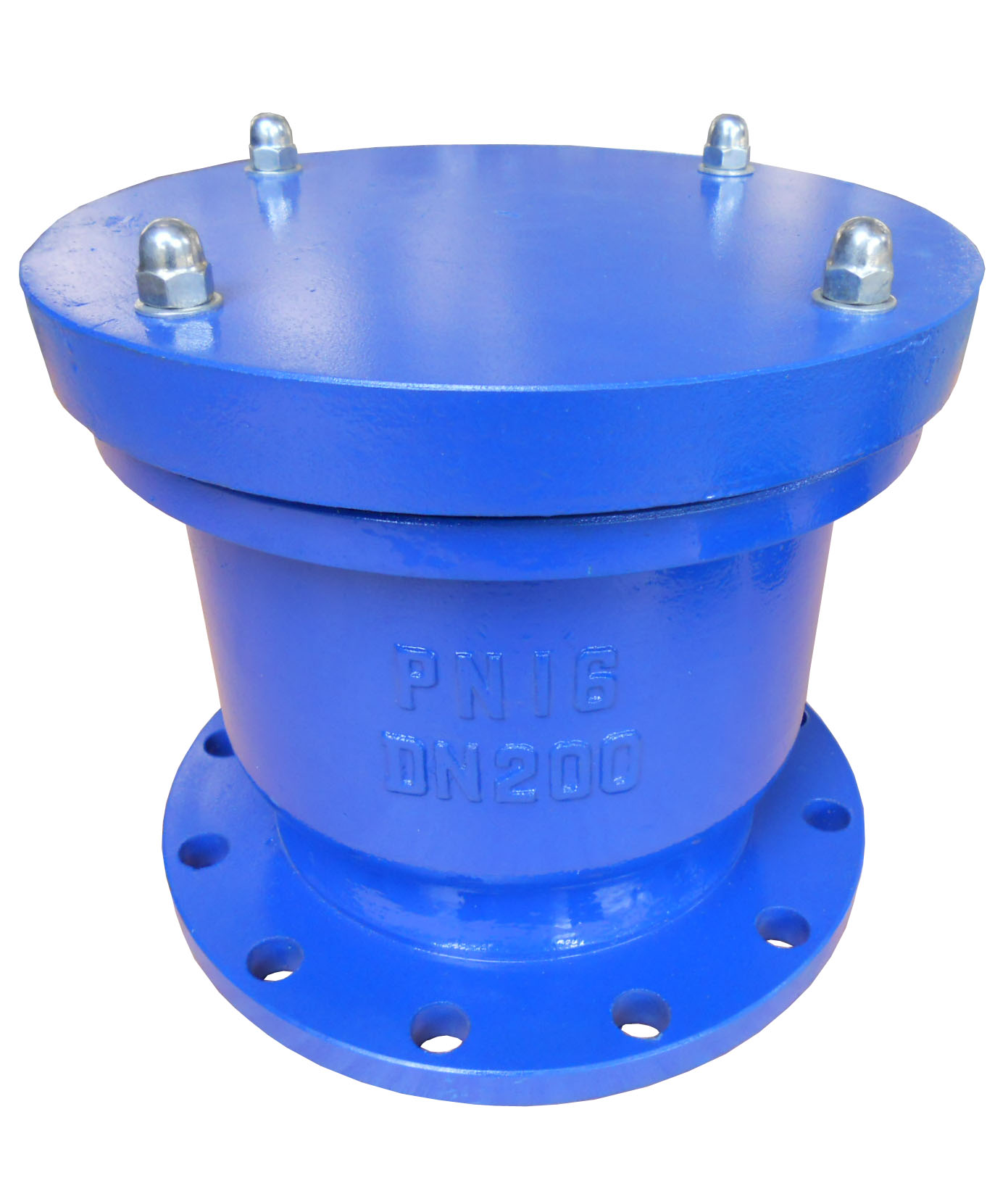
An air valve is a mechanical device designed to control, direct or regulate the flow of compressed air or gas within pneumatic circuits and industrial processes.
Built around a poppet, spool or diaphragm element, it opens, closes or modulates passages when actuated manually, electrically or pneumatically, delivering instant on-off or proportional control with minimal pressure drop.
When the pilot signal shifts the internal element, air is directed from the supply port to the cylinder port and simultaneously exhausted from the opposite side, creating linear or rotary motion in actuators, grippers or tools.
Compared with a manual petcock or gate valve, an air valve not only provides rapid response (5–50 ms) but also integrates with PLCs for automated sequences, greatly increasing machine throughput and safety.
Working Principle of an Air Valve
The core function is to switch or throttle compressed-air paths while maintaining system pressure integrity.
Its operation can be understood in two stages: valve actuation and air flow logic.
1. Valve Actuation
A solenoid coil, air pilot or manual lever overcomes spring force and shifts a spool or poppet.
In a 5/2 valve, for example, the spool moves 3 mm to connect Port 1 (supply) to Port 4 (cylinder extend) and Port 2 (cylinder retract) to Port 3 (exhaust); the overlap geometry ensures no short circuit between supply and exhaust .
2. Air Flow Logic
Air follows the path of least resistance created by the spool lands.
Flow coefficient (Cv) values from 0.1 to 4.0 cover applications from tiny 6 mm tubing to 2 inch plant mains; the same valve body can be fitted with different orifices to tune speed or consumption .
Example of Status Feedback
- Solenoid energised → 24 V coil current 0.45 A (green LED): valve shifts, cylinder extends.
- Coil open-circuit → current < 0.05 A (red LED): PLC triggers fault and stops cycle.
- Low pressure < 0.3 MPa → pressure switch opens: alarm prompts compressor start.
Importance of Air Valves
Ensuring Fast, Repeatable Motion
Especially in packaging and automotive lines, air valves cycle actuators 10–15 times per second; a 10 ms shift-time difference can add 5 % throughput.
Saving Energy
Modern lapped-spool designs with soft-seal technology reduce internal leakage to < 0.5 l/min at 0.6 MPa, cutting compressor run-time and CO₂ footprint.
Compliance with Global Safety Codes
Valves sold in the EU must meet ISO 5599 or EN 983 for structural integrity; many carry UL, CSA and CE marks for worldwide machine export.
Types of Air Valves
1. By Function
2/2 Way:
On-off for single lines; used for blow guns or tank drains.
3/2 Way:
Supply to cylinder, then exhaust; common for single-acting actuators.
5/2 Way:
Controls double-acting cylinders; most popular in automation.
5/3 Way:
Centre closed, centre exhaust or centre pressure; useful for mid-stop safety.
2. By Actuation Mode
Solenoid-Operated:
24 V DC or 110 V AC coils, 0.1–10 W power; ideal for PLC control.
Air-Piloted:
Uses 0.2–0.8 MPa air signal to shift main spool—suitable for hazardous areas where electricity is limited.
Manual / Mechanical:
Push-button, lever or roller cam for setup, emergency or portable tools.
3. By Construction
Poppet Type:
Fast, positive sealing; good for vacuum or light-load applications.
Spool Type:
Balanced design allows high flow and low shift force; tolerant of contaminated air.
Diaphragm Type:
No sliding seals, excellent for corrosive or food-grade environments.
Applications of Air Valves
Factory Automation & Robotics
5/2 solenoid valves drive pick-and-place cylinders at 10 Hz; proportional variants provide force control for delicate part handling.
Automotive Assembly Plants
Air-piloted 5/3 centre-exhaust valves stop welding fixtures instantly when an E-stop is pressed, meeting Category 3 safety per ISO 13849.
Food & Beverage Packaging
316 stainless-steel poppet valves with FDA-approved seals direct 0.6 MPa air to carton pushers and bottle cappers, surviving caustic wash-down.
Medical & Dental Equipment
Miniature 10 mm 3/2 valves control air to dental drills and ventilators, offering < 2 ms response and certified to IEC 60601-1.
Heavy-Duty Transport
Trailer brake systems rely on 24 V solenoid valves to pulse 1 MPa air for ABS modulation, ensuring 10 bar holding pressure even at −40 °C.
Selection Recommendations
For high-speed pick-and-place with 6 mm nylon tubing, choose a 5/2 way solenoid valve with 0.55 Cv, 24 V DC coil and M8 connector—delivers 10 ms shift time and IP65 protection.
For Category 3 safety circuits, specify a 5/3 way centre-exhaust air-piloted valve with monitored position feedback—meets ISO 13849 PL-e and stops cylinder motion in < 30 ms when air is removed.
Air valves are now the heartbeat of every pneumatic system, perfectly combining speed, reliability and energy efficiency in one compact package.
Their wide use in robots, vehicles, food lines and medical devices reflects their importance in keeping modern automation productive and safe.
At Union Pneumatics, we stock over 2 000 valve configurations—poppet, spool, solenoid, pilot, stainless—from 1/8 to 2 inch ports, all 100 % leak-tested and backed by global certifications.
With custom manifolds, field-bus options (IO-Link, PROFINET) and same-day shipping, every air valve we deliver is ready to keep your machines—and profits—moving.
To learn more, visit the Union Pneumatics official website—and feel free to contact us for CAD files, flow curves or next-day samples.



 8615510865705
 8615510865705